
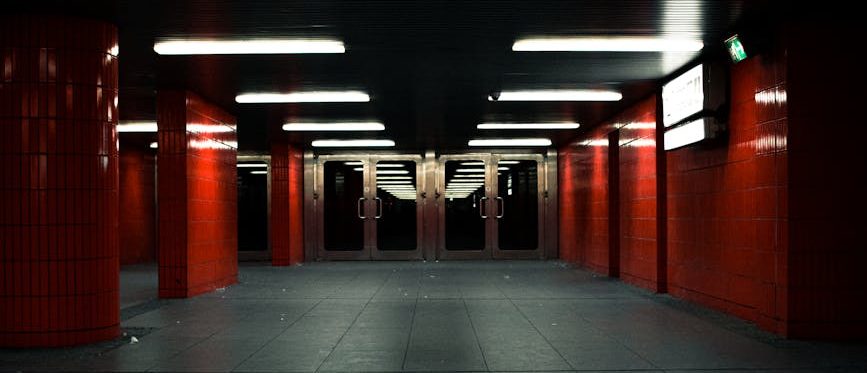
Reverb is far more than just adding a “wet” effect. It’s the very fabric of acoustic space, dictating where a sound exists, its scale, and its emotional resonance. For solidskillsy., in Kristiansand, Norway, our approach to reverb is akin to architectural design: meticulously crafting environments that can be either breathtakingly realistic or beautifully stylised to serve your project’s unique sonic identity.
The difference between a generic reverb preset and a masterfully designed acoustic space can transform a scene from flat to profoundly immersive, enhancing the rhetoric and texture of your narrative.
The Building Blocks of Reverb: Beyond Decay
While “decay time” is the most commonly adjusted parameter, it’s merely one aspect of a complex phenomenon. True reverb design considers:
- Pre-Delay: This is the time gap between the direct sound and the onset of the first reflection. A longer pre-delay suggests a larger space, as sound takes more time to travel to a wall and bounce back. Manipulating pre-delay is crucial for adding a sense of size without muddying the direct sound.
- Early Reflections (ERs): These are the very first echoes that reach the listener after the direct sound, having bounced off one or two surfaces. They provide crucial information about the size, shape, and surface materials of a room. ERs are often more important for defining the “character” of a space than the full decay tail.
- Density: This refers to how quickly the echoes become tightly packed together after the early reflections. High density creates a smooth, lush reverb; low density can create distinct, noticeable echoes, suitable for specific stylistic choices.
- Diffusion: This describes the complexity of the reflections. A highly diffuse reverb sounds smooth and washes out individual echoes, typical of irregular room shapes or diffusers. Less diffusion can sound more metallic or fluttery.
- Decay Time (RT60): The time it takes for the reverb to decay by 60 dB. This parameter defines the perceived “length” of the space.
- Frequency Response of the Reverb Tail: Real-world materials absorb different frequencies at different rates (e.g., soft materials absorb high frequencies faster). EQing the reverb tail to mimic this behavior (e.g., rolling off highs for a “darker” room) adds realism.
Algorithmic vs. Convolution: Choosing Your Architect’s Tools
Modern reverbs come in two main families, each with unique strengths:
- Algorithmic Reverb: These are mathematical models that simulate reflections and decay. They offer immense flexibility to create impossible spaces (e.g., infinite halls, metallic chambers) or highly customised acoustic environments. They are fantastic for creative sound design, musical scores, and adding a specific “flavour.”
- Convolution Reverb: These reverbs use Impulse Responses (IRs); that is, digital recordings of how a real space, or a famous hardware unit, responds to an instantaneous sound (like a pistol shot or a sine sweep). Applying an IR to your sound recreates the “exact” acoustic properties of that sampled space. This is invaluable for:
- Realism: Putting dialogue or ADR into a specific location (e.g., a specific church, a tunnel, a car interior) to match on-set recordings.
- Historical Accuracy: Recreating the acoustics of a specific concert hall or period-accurate space for a film score.
- Matching: Seamlessly blending separately recorded elements into a unified environment.
Beyond the “Wet/Dry” Knob: Strategic Reverb Design
For professionals, reverb isn’t just an “effect” but an integral part of the mix’s spatial dimension:
- Front-to-Back Depth: Using pre-delay and subtle early reflections to push elements further back in the mix or bring them forward.
- Creating a “World”: For film and game sound design, carefully crafted ambience and reverb textures are crucial for immersing the audience in the fictional world, making it feel believable and lived-in.
- Emotional Weight: Long, diffused reverbs can evoke a sense of grandeur, loneliness, or spirituality. Short, dense reverbs can create intimacy or urgency.
- Problem Solving: Using subtle reverb to mask imperfections or blend disparate recordings.
At solidskillsy., we are very interested in the language of acoustic design. Whether it’s meticulously recreating the acoustics of a Viking hall for a historical drama, or designing a futuristic, alien soundscape for a game, our expertise in advanced reverb and early reflection techniques ensures your audio achieves unparalleled immersion, contributing directly to your project’s high-budget rhetoric and compelling narrative.
Ready to sculpt perfect acoustic spaces for your next project? Let’s discuss your vision.
 solidskillsy.